
The short version: one woman, a workshop in Ilfracombe, and a lot of soy wax.
In January 2019, I was looking for something to keep my hands busy during the long evenings. I'd always loved candles and home fragrance, but the shop-bought wax melts I'd tried were either sickly sweet or had that artificial "clean cotton" smell that doesn't actually smell like cotton at all.
So I ordered some soy wax, a handful of fragrance oils, and a cheap silicone mould. The first batch was terrible. The second was worse. The third one, though, was a lavender blend that actually smelled like the plants in my nan's garden, and that was the moment I got hooked.
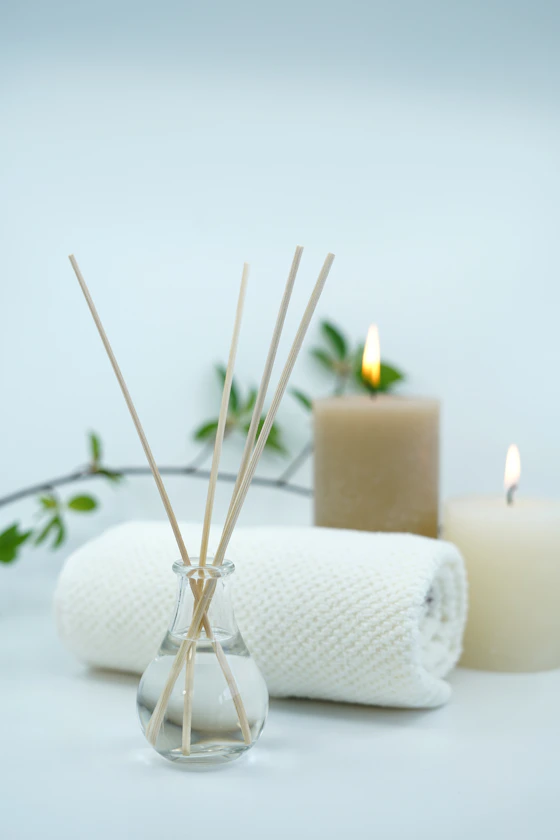
Every melt starts with natural soy wax. It's more expensive than paraffin, and it can be fussier to work with, but it burns cleaner and throws scent better in a burner. The fragrance oils come from two UK suppliers I've tested extensively. I go through about 40 samples to find one I'll actually sell.
The packaging is all recyclable or compostable. The snap bar moulds are reusable silicone. I don't use any synthetic colourants anymore. Some of the melts have a natural tint from the oils themselves, but most are just the creamy off-white of plain soy wax.
I pour everything in my workshop at the back of the house. It's a converted shed with proper ventilation, a temperature-controlled wax melter, and a digital scale accurate to 0.1g. Not glamorous, but it does the job right.
I've lived in North Devon most of my life. When I create new scents, I pull from what I know: the salt air at Tunnels Beach, wild garlic in the woods above Lee, the way a log fire smells when you walk past a pub on Fore Street in December. These are real smells from real places, not abstract concepts dreamed up in a marketing meeting.
Some customers have told me the scents remind them of holidays in Devon. That's probably the nicest thing anyone's said about my work.